
Something happened. An accident, a hospital stay, a frightening argument between adults, a death, a move that took everything familiar away at once. You know your child was affected, because they are not quite themselves. What you cannot get is any account of it from them.
Parents often read that silence as either coping well or hiding something. It is usually neither.
Why children do not tell you
The first reason is mechanical. Narrating an event requires vocabulary, a sense of sequence, and the ability to hold a listener’s perspective in mind while speaking. Those develop at different rates and none of them is complete in a six-year-old. A child can have a vivid, detailed experience and no route to convert it into a sentence.
The second is that frightening experiences are frequently not stored as narrative in the first place. What remains is sensory and fragmentary — a sound, a smell, a feeling in the body, an image. Asking for the story requests something the child may not possess in that form. The National Child Traumatic Stress Network’s overview of the different types of childhood trauma and their page on early childhood trauma specifically are both worth reading if you want the clinical picture.
The third reason applies more to older children, and parents find it the hardest to hear. Many stay quiet to protect you. They have noticed that the subject upsets you, and they have decided, reasonably, not to cause that.

What you see instead
Because it does not come out as an account, it comes out somewhere else, and where it comes out varies sharply by age.
| Age | How it commonly appears | What parents often conclude |
|---|---|---|
| Under 5 | Sleep disruption, clinginess, regression | A phase, or attention-seeking |
| 5-8 | Repetitive play, stomach aches, new fears | Being dramatic |
| 9-12 | Irritability, school refusal, withdrawal | Bad attitude |
| Teenagers | Anger, isolation, risk-taking | Ordinary adolescence |
| Any age | Regression to earlier behaviors | Going backwards deliberately |
Regression is worth a note because it alarms parents disproportionately. A child who was dry at night starting to wet the bed, or a seven-year-old wanting to be carried, is not manipulating anyone. Under load, children reach for the developmental stage where they last felt safe. It is a reasonable response, and it resolves as the load reduces.
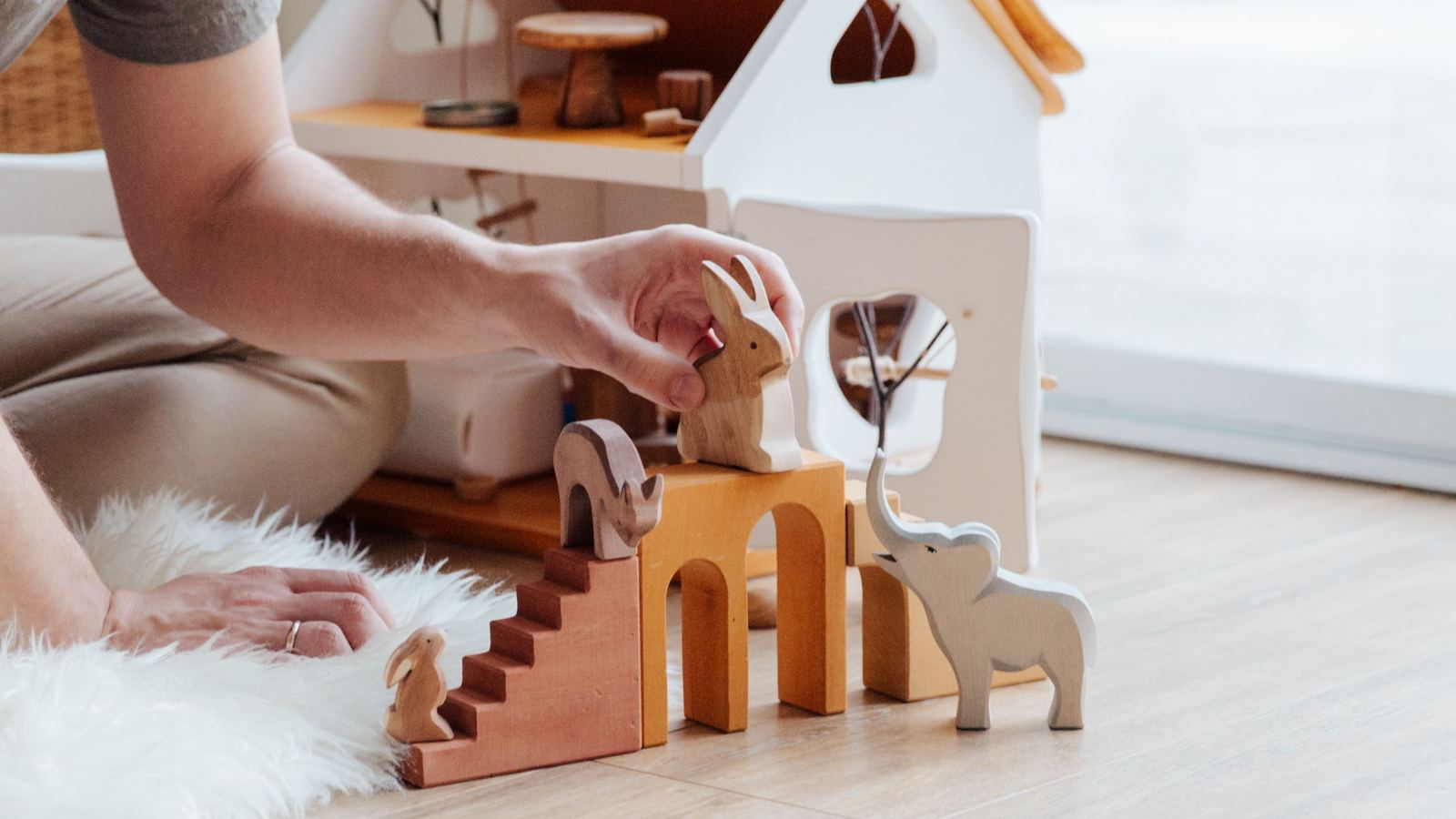
Repetitive play deserves attention too, and it is easy to miss because it looks like ordinary play. A child staging the same crash, the same separation, the same rescue, over and over, is not stuck. They are doing the thing children do instead of talking.
What helps at home
Predictability does more than conversation. Meals, bedtimes and who collects them from school carry a message about the world being reliable again, and that message is more digestible than any reassurance you can say out loud.
Make yourself available rather than enquiring. Children disclose sideways and at inconvenient moments — in the car, at bedtime, during something else. The parent who is present and unhurried gets told things. The parent who asks directly, repeatedly, usually gets a version designed to close the subject.
When something does come out, the most useful response is generally the least dramatic one. A child watching for whether you can handle it will read a strong reaction as an answer.
It is also worth resisting the urge to correct the account. Children frequently carry a version in which they caused it, or could have prevented it, and that belief is worth knowing about before it is argued with. Hearing it out first tells you what your child actually thinks happened.
Why play and sand tray reach it
This is the part that sounds least plausible to adults and is best supported. Play is not a way of easing a child toward the real conversation. For a child under about ten, it is the medium in which the material is actually accessible.
In a sand tray a child selects small figures and arranges them. What tends to appear is structure rather than incident: who is large and who is small, what is buried, what is fenced off, who is placed at a distance from whom. A child who cannot answer a single question about a frightening night can often show you exactly where everyone stood in relation to each other.

| What to look at | Talking | Play and sand tray |
|---|---|---|
| Requires | Vocabulary and sequencing | Choosing and arranging |
| Best suited to | Roughly 11 and older | Roughly 3 to 11 |
| What it produces | An account | A structure to work with |
| Pressure on the child | High if words are unavailable | Low; nothing must be named |
| Parent involvement | Often outside the room | Often part of the work |
The distance is the mechanism. A figure in a tray can be in danger without the child having to say that they were. That gap is what makes the material approachable, and closing it too early — by asking what the figure really means — tends to shut the work down. Our guides to what actually happens in a sand tray session and how play therapy and talk therapy compare describe both in more detail.
When to get help
Some disruption for a few weeks after a frightening event is ordinary and does not need a therapist. What warrants one is difficulty that is not easing after about a month, that is getting worse rather than better, or that has started to narrow your child’s life — places they will not go, things they will not do, people they will not be left with.
Sooner if there is a new fear that is spreading, if sleep has not recovered, or if your child has become someone noticeably different for more than a few weeks. Our child therapy page explains how we work, and sand tray therapy covers the approach most often used for exactly this.
A closing reassurance, because parents in this position are almost always carrying some version of it. Children are not fragile, and a hard experience is not a sentence. What predicts how well a child comes through something difficult is, more than almost anything else, having at least one adult who stays steady and available — which, if you are worried enough to be reading this, you are already doing.
Frequently asked questions
Why will my child not tell me what happened?
Usually not concealment. Young children often lack the vocabulary and the sequencing to narrate an event, and the memory itself is frequently stored as sensation and image rather than story. Older children more often stay silent to protect a parent from being upset.
Should I keep asking?
Asking once, openly, and making clear you can hear it is useful. Repeated questioning is not, and tends to produce either withdrawal or an answer shaped to end the conversation. Availability works better than enquiry.
Is it better for children to talk about it or move on?
Neither, put that way. Children do not need to recount an event to recover from it, but they do need somewhere for it to go. Play, drawing and sand tray work give it a route out that does not depend on being able to describe it.
How long should I expect this to last?
Some disruption for a few weeks after a frightening event is ordinary. What warrants attention is difficulty that is not easing after about a month, that is worsening, or that has begun to shrink what your child is willing to do.
Does my child have to talk to a stranger about it?
Not in the way adults imagine. With younger children the work is usually done through play rather than conversation, and a good therapist will not press a child to narrate something they cannot yet put into words.
Our pages on child therapy in Orem, play therapy and sand tray therapy explain how we work with this, and our guide to anxiety in children and the signs parents miss covers what often follows. You can contact the office with a question.