

You did not intend for the evening to go that way. Something small happened — a spilled drink, a question asked twice, a tone you did not like — and thirty seconds later you were shouting, and now the house has gone quiet in a way you recognize.
Most people who look this up are not looking for permission. They already know something is wrong, and what they usually want to know is whether it is fixable and whether they are the kind of person they are afraid they might be.
Anger is not the problem
Anger is a normal signal, and people without access to it tend to do badly. It flags a boundary crossed, an unfairness, a threat. The difficulty is never the emotion.
The difficulty is what happens in the gap between feeling it and acting on it. For some people that gap has become very short, and the useful question is not how to stop feeling angry but what has happened to the gap.

Why it happens at home and nowhere else
Almost everyone who describes this says the same thing: it never happens at work. That is usually true, and it is informative rather than exculpating.
Two things are going on. Work has immediate consequences and home does not, so the inhibition that holds all day is not needed in the same way after six o’clock. And holding it together for nine hours is itself depleting — regulation is a finite resource, and most people arrive home with less of it than they had at breakfast.
This explains the pattern without excusing the behavior. It also points at where the work actually is, which is frequently not the moment of the outburst but the eight hours before it.
| Factor | How it shows up | What helps |
|---|---|---|
| Sleep debt | Worse in the evening, worse midweek | Treat it as a health issue |
| Held-in stress | Fine all day, gone by 6pm | Somewhere else for it to go |
| Chronic pain or illness | Irritability with no obvious cause | Address the underlying issue |
| Alcohol | Lower threshold, less memory of it | An honest look at the amount |
| Unaddressed trauma | Reactions out of proportion | Therapy that treats the cause |
That last row is worth expanding, because it explains the reactions that seem disproportionate even to the person having them. The VA’s National Center for PTSD has a useful overview of the relationship between anger and trauma, including why a threat response calibrated to an earlier environment goes off at ordinary domestic friction.
What children actually take from it
Parents in this position often reassure themselves that the children are fine, that they were not the target, or that they were in another room. Children are considerably better observers than that.
What a child registers is not the content of the argument. It is unpredictability — the fact that the mood of the house can change without warning and for reasons they cannot identify. What they develop in response is vigilance: a habit of monitoring the adults, reading the room on entry, and managing their own behavior to keep things calm.
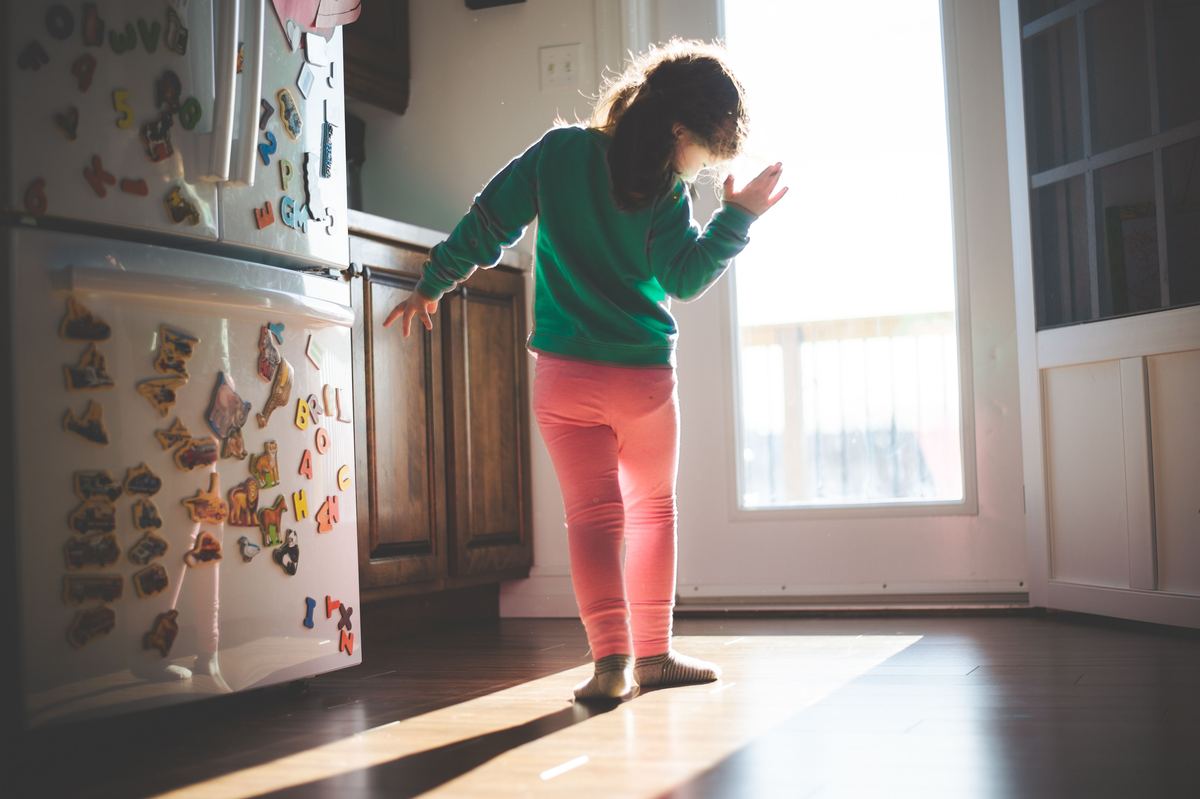
That vigilance is expensive and it is durable. Our guide to anxiety in children and the signs parents most often miss describes what it looks like from outside, and it is frequently mistaken for a compliant, easy child.
The line that matters
This is the part most articles avoid, and avoiding it does no favors in either direction. There is a difference between a temper that needs work and behavior that needs to stop, and it is not measured in volume.
| What to look at | A temper that needs work | Behavior that needs to stop |
|---|---|---|
| Direction | Situations, objects, yourself | Aimed at a specific person |
| Pattern over time | Not escalating | Escalating, or a cycle |
| Afterward | Genuine remorse, repair attempted | Blame shifted to the other person |
| Effect on others | Upsetting | They are afraid, and adapting |
| Control | Loses it, wishes they had not | Used, and stops when convenient |
The rightmost column describes abuse, whether or not anyone has been hit. The clearest indicators are the last two: whether the people in the house are frightened of you, and whether the anger is somehow available when it is useful and absent when it would be costly.
If you are the person reading this because someone else’s anger frightens you, that fear is the relevant fact and it does not need to be justified by an injury. The National Domestic Violence Hotline, on 1-800-799-7233, will talk it through with you without requiring you to decide anything.
What actually helps
The in-the-moment techniques are worth having and are not sufficient. Leaving the room works, provided it is agreed in advance and understood as a pause rather than a walkout. Naming it out loud — saying that you are getting angry and are going to stop talking for ten minutes — works better than most things.
What makes the difference over months is repair. Almost everyone in this pattern apologizes; far fewer come back to it once things are calm and say specifically what happened, without a qualifier attached. An apology that ends with a reason the other person contributed is not repair, and children in particular hear the second half.
The strongest predictor of change is treating this as a problem in its own right rather than as a symptom of how difficult everyone else is being. People who arrive saying they need to do something about their temper tend to do well. People who arrive to explain the provocation generally do not, at least not yet.

When to get help
When it is frequent enough to be a feature of your household rather than an event. When your partner or children have changed how they behave around you. When you cannot stop it once it starts, or cannot always remember it clearly afterward. When alcohol is involved.
Immediately if there has been any physical contact, or if you have frightened yourself. That is not a reason for shame and it is a reason to make an appointment rather than a resolution.
Our pages on family counseling and marriage counseling explain how we work with this, and our guide to the four communication patterns that damage a marriage covers what tends to set in around a short temper if it is left alone.
One last thing, addressed to the person who recognized themselves in the first paragraph. Anger that has become a pattern is one of the more treatable things people bring to a therapy room, and it responds much better to being named than to being managed privately for another decade.
Frequently asked questions
Is it normal to get this angry?
Anger itself is ordinary and useful. What is not ordinary is anger that frightens the people you live with, that you cannot interrupt once it starts, or that you consistently regret afterward. Frequency and effect matter more than intensity.
I have never hit anyone. Does that mean it is not a problem?
Not on its own. Children and partners respond to volume, unpredictability and the expectation of an outburst, none of which require physical contact. If people in your house are managing their behavior to avoid triggering you, that is the relevant measure.
Why do I only lose my temper at home?
Because home has no consequences that arrive immediately, and because you have been holding it together elsewhere all day. That is an explanation rather than a defense, and it points at where the work is: what is depleting you before you get home.
Does anger management actually work?
The techniques work for interrupting an episode. On their own they tend not to last, because they treat the final thirty seconds and not what is underneath. The approaches that hold usually address the reasons the fuse is short in the first place.
My partner’s anger frightens me. What should I do?
Take that seriously rather than talking yourself out of it. Fear is the signal that matters, and it does not require anyone to have been hit. The National Domestic Violence Hotline is 1-800-799-7233 and can talk through what you are experiencing without you committing to anything.
Our pages on family counseling in Orem and counseling for anxiety and depression explain how we work with this. You can contact the office with a question.