
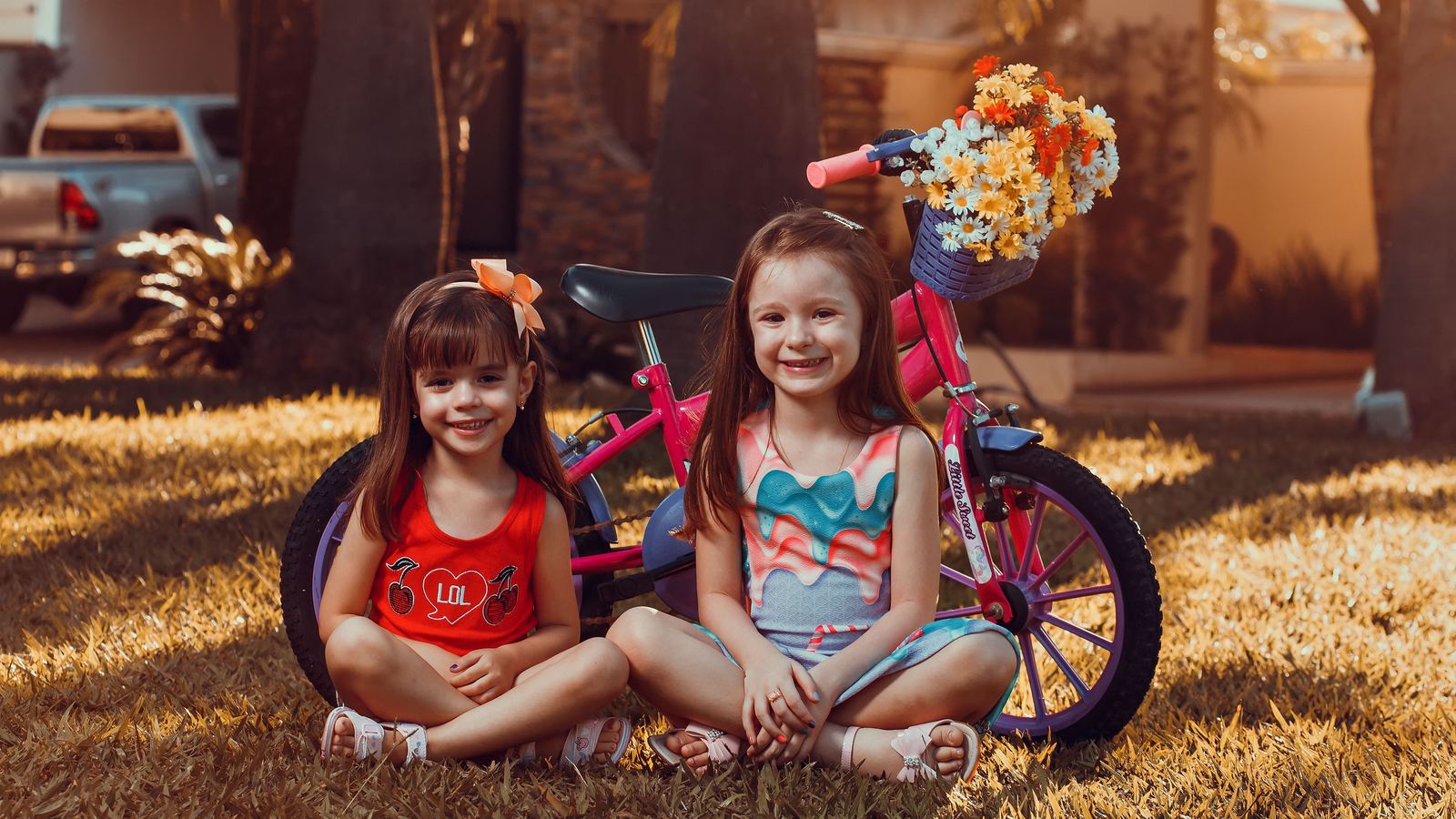
Parents of more than one child spend a startling proportion of their day adjudicating. Who had it first, who started it, whether that counted as hitting, and whether the portions were equal.
It is exhausting, and most of it is entirely normal. Young siblings squabble many times an hour, and the majority of those exchanges are ordinary negotiation rather than evidence of anything wrong.
What sibling conflict is actually for
Before deciding how to reduce it, it is worth knowing what it is doing, because some of it is work that needs to happen.
Siblings are where most children first practise the difficult social skills: negotiating, losing, sharing something they do not want to share, repairing after a falling out with someone they cannot walk away from.
That last part is the important one. Friendships can be exited; sibling relationships cannot, which makes them the only place a child learns to recover a relationship they have damaged.
A household with no sibling conflict at all is not necessarily doing better. Sometimes it means the disagreements have gone underground.
The measure is the ratio, not the volume. Loud but affectionate is a different picture from quiet but cold. What matters is whether warmth outweighs friction across a week.
When to intervene, and when not to
The default should be not intervening, which is uncomfortable advice for most parents.
Children who are consistently rescued do not develop the skills the conflict exists to teach. Worse, a parent who reliably arbitrates becomes a resource worth competing for, and the fighting increases because it now has an audience and a prize.
There are exceptions, and they matter.
| Situation | Response | Why |
|---|---|---|
| Bickering over a toy or a turn | Stay out | This is the negotiation practice doing its job |
| Raised voices, no threat | Stay out, or move nearer without speaking | Presence often settles it without arbitration |
| Physical risk | Step in immediately, separate first, discuss later | Safety is not negotiable and reasoning does not work mid-fight |
| The same child always loses | Step in, quietly and separately | A fixed power imbalance is not practice, it is a pattern |
| Humiliation or character attacks | Step in | Contempt damages differently from conflict |
| One child is frightened of the other | Step in, and get help | Fear between siblings is outside the ordinary range |
What makes it worse
A few well-meant parental responses reliably increase sibling conflict rather than reducing it.
Investigating who started it teaches children that the winner is whoever tells the story best, and turns every squabble into a trial. Insisting they apologise immediately produces a performance rather than a repair. And comparing them — even favourably — hands them a scoreboard they will keep using.
The most effective parental line is usually the least satisfying one: treat it as a shared problem rather than a crime with a culprit. “You two are having trouble sharing that. What are you going to do?” declines the role of judge without abandoning them.
Fairness is the wrong target
Most parents work extremely hard at treating children equally, and children remain convinced they are being treated unfairly. This is not ingratitude; it is arithmetic. Equal treatment is impossible, and pursuing it produces a household that audits everything.
The more useful principle is meeting need rather than matching quantity, and saying so plainly. “You each get what you need, and that will not always look the same” is a sentence children can be taught to live with. It is also true, which helps.
The role trap
This one outlasts childhood. Adults describing their siblings will often still be using the labels the household assigned thirty years earlier, which is a fair indication of how durable they are once they set.
Families assign roles quickly and hold them for decades: the responsible one, the difficult one, the sensitive one, the funny one.
These are usually descriptive at first and prescriptive afterwards. A child who is labelled the instigator is more likely to be blamed by default, which produces resentment, which produces the behaviour that confirms the label.
The practical move is to address behaviour without converting it into identity. “That was unkind” leaves room. “You’re always the one who starts it” does not.
| What to look at | Ordinary rivalry | Worth acting on |
|---|---|---|
| Roles | Swap around; both give and take | Fixed: the same target every time |
| Intent | To win the argument or the object | To humiliate or to hurt |
| Recovery | Playing together again within the hour | Resentment that carries for days |
| Balance | Warmth clearly outweighs conflict | Conflict and coldness dominate |
| The quieter child | Holds their own | Avoids the sibling, or avoids being at home |
| Physical | Scuffles that stop when asked | Force intended to injure |
What reduces it
- One-to-one time with each child. A surprising amount of sibling conflict is competition for a parent’s attention, and it drops when the competition is less necessary.
- Territory. Somewhere, however small, that belongs to each child and is not subject to negotiation.
- Stop comparing, entirely. Including favourable comparisons, which are heard by the other child.
- Let them settle small things. “I’m confident you two can work that out” is a genuine intervention, not an abdication.
- Notice cooperation out loud. Families become skilled at commenting on conflict and silent about the hours that went well.
PBS Parents’ Thrive guidance for parents on child development and behaviour covers a good deal of this ground with practical examples.
When it is more than rivalry
Most parents can sense this line without being able to describe it. Being able to describe it makes it much easier to act on, and much easier to explain to somebody else.
There is a line, and it is worth being able to describe it rather than relying on instinct alone.
Ordinary rivalry is reciprocal: the roles swap, both children give as good as they get, and both recover. What is outside that range is a fixed pattern in which one child is consistently the target, where the intent is to humiliate or injure rather than to win, or where one child is frightened of the other or arranges their day to avoid them.
It also matters if a child is avoiding being at home, if the conflict is driving the parents’ own relationship into difficulty, or if one child’s wellbeing is visibly being eroded.
Getting help
Parents frequently delay on this one, because sibling fighting feels too ordinary to take to a professional and because they assume they will be told to be more consistent. In practice it is a common reason families come in, and it is rarely treated as trivial.
Sibling difficulty is one of the more responsive things family therapy addresses, largely because it is rarely about the siblings alone. It usually sits inside a wider pattern — attention, roles, stress, a recent change — and shifting the pattern shifts the conflict.
Our guide to when a family needs therapy covers how to judge that, and in a stepfamily the dynamics are different again, which our article on blended families addresses.

Frequently asked questions
How much sibling fighting is normal?
A great deal. Young siblings squabble many times an hour, and most of it is ordinary negotiation about territory and fairness rather than a sign of a damaged relationship.
Should I step in when they argue?
Usually not, unless someone is at risk of being hurt or the same child is always losing. Children who are always rescued do not learn to negotiate, and the adult who arbitrates becomes a prize worth fighting for.
One of my children is clearly the instigator. What do I do?
Avoid assigning permanent roles. Fixed labels — the difficult one, the easy one — tend to become self-fulfilling. Address behaviour in the moment without turning it into an identity.
They fight constantly but seem fine afterwards. Is that all right?
Generally yes. What matters is the overall balance of warmth to conflict, and whether they recover. Loud but affectionate is a different picture from quiet but cold.
When is it more than rivalry?
When one child fears the other, when roles are rigid rather than reciprocal, when the intent is to injure or humiliate rather than to win, or when a child is avoiding being at home.
Our pages on family counseling and child therapy in Orem explain how we work with this, and you can contact the office with a question.