

Sand tray therapy is the approach parents most often ask about and least often picture correctly. The name suggests a sandbox, which undersells it considerably.
What it involves is a shallow tray of sand, a shelf of small figures, and an invitation to build a scene. What comes out of that is frequently more direct than anything the same person would say out loud.
What sand tray therapy is
The tray is a bounded space. That boundary matters: it makes the task finite and safe, unlike a blank page or an open question.
The person building the scene chooses from a collection of miniatures — people, animals, buildings, vehicles, trees, fences, bridges, and figures representing threat, protection and comfort. There is no correct arrangement.

The scene is not a puzzle for the therapist to solve. It is a way of putting something outside yourself so that it can be looked at from a small distance. That distance is the entire mechanism.
What happens, step by step
- Introduction. The therapist explains the tray and the shelf, and makes clear there is no right way to do it. For a child this takes about a minute.
- Choosing. The person selects figures. Some deliberate for a long time; others sweep an armful off the shelf. Both tell you something.
- Building. The scene is arranged in the sand. The therapist stays quiet and present rather than commenting as it goes.
- Noticing. Once it is finished, the therapist asks about it. Often simply “tell me about this part” rather than “what does this mean”.
- Ending. The tray is photographed in some practices, then cleared. Clearing it is part of the work.
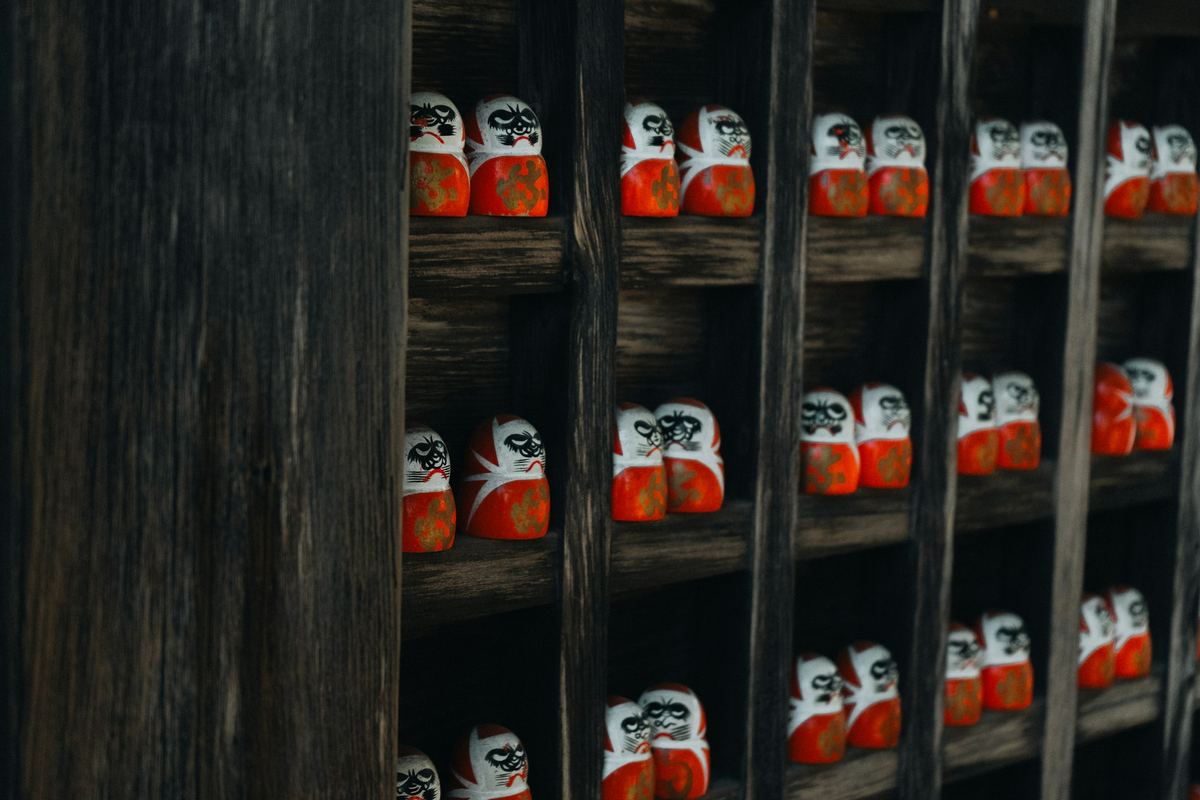
The miniatures, and why choice matters
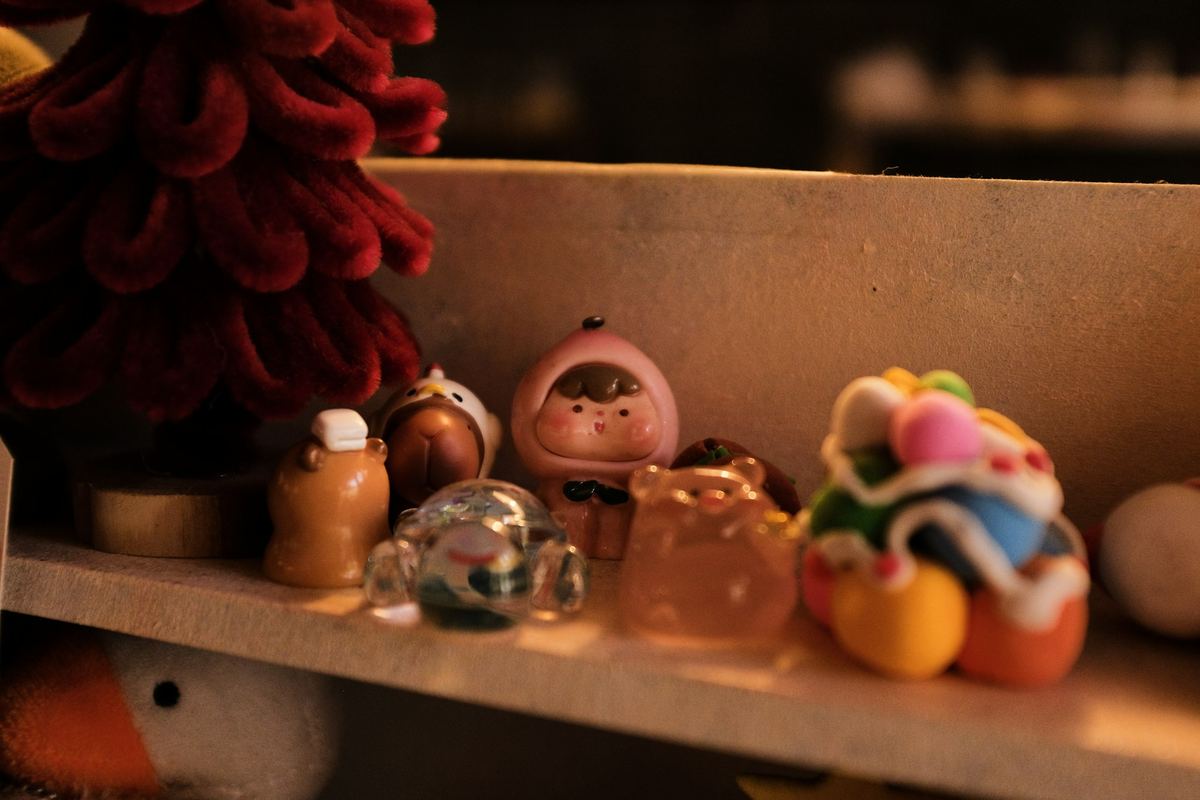
A well-stocked collection covers whole categories of experience: family, danger, safety, travel, boundaries, nature, fantasy. The range is deliberate.
If a child can only find figures for one kind of experience, the tray cannot represent their life. If the range is wide, what they select becomes meaningful, because they could have chosen otherwise.
Therapists searching for the practical side of this — which sand to use, how to build a collection — are usually looking for professional training resources rather than a guide for families. For parents, the useful thing to know is simply that the choice is wide on purpose.
Why the tray is cleared at the end
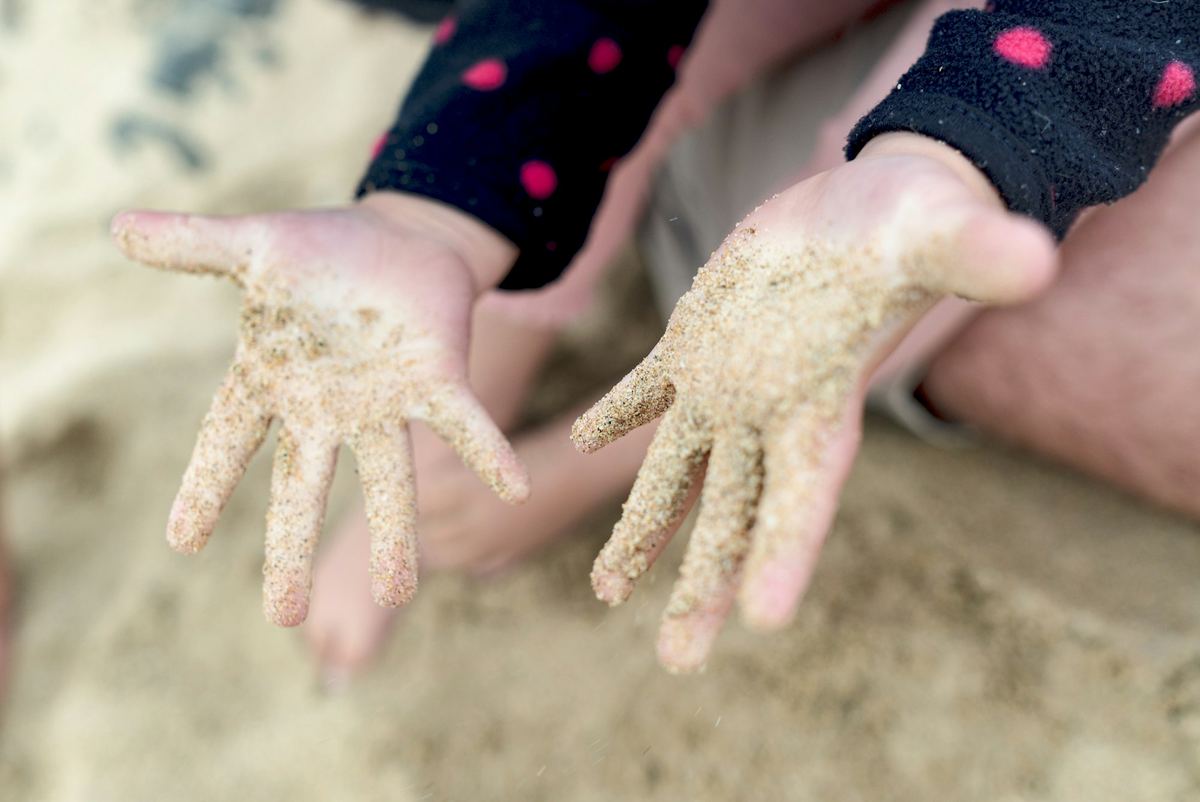
Clearing the sand is not tidying up, and it is not done while the person is still in the room in every approach. It marks the end of the piece of work.
Leaving a scene standing would turn it into a permanent statement, which is the opposite of what the tray is for. The point is that something can be built, looked at, and then released, including the difficult parts. Children in particular tend to find the clearing reassuring once they understand it is coming.
Sand tray, play therapy and art therapy compared
| What to compare | Sand tray therapy | Play therapy | Art therapy |
|---|---|---|---|
| The medium | A tray of sand and miniature figures | Toys, games and free play | Drawing, paint, collage, clay |
| How structured | Bounded and contained by the tray | Open and child-led | Varies from free to directed |
| Typical ages | Roughly 6 to adult | Roughly 3 to 12 | Any age |
| Verbal demand | Low | Very low | Low to moderate |
| Especially useful for | Experiences that are hard to say out loud | Younger children, behaviour and routine | Processing over time, externalising feelings |
| What the person leaves with | A scene, then a cleared tray | A shared experience | A physical piece of work |
The three overlap in practice and are often used with the same person at different points. If you are choosing between approaches for a younger child, our guide to play therapy versus talk therapy for children covers that decision more fully.
What parents expect, and what actually happens
| What parents often expect | What usually happens |
|---|---|
| “It is just playing in sand” | The tray is bounded and the figures are curated. The structure is what makes it therapeutic |
| “The therapist will tell us what it means” | Meaning is drawn out from the person who built the scene, not announced by the therapist |
| “My child will refuse” | Refusal is rare, because nothing has to be explained. Most children start building within a minute |
| “I will be able to watch” | Usually not during the session. Parents are normally updated separately |
| “We will see results immediately” | Some trays shift something quickly. More often it accumulates over several sessions |
| “It only works for young children” | Adolescents and adults use it regularly, often more readily than they talk |

What you will be told afterwards
Parents are usually updated, but not with a transcript. A therapist will normally describe the themes and anything that affects safety or the plan, rather than reporting scene by scene.
That boundary is deliberate. A child who believes the tray will be relayed home in detail builds a tray for the audience rather than for themselves, and the value of the method disappears. If you are unsure what will and will not be shared, ask at the start — a clear answer up front prevents a lot of frustration later.
What if my child builds something upsetting?
This is the question parents ask most often once they understand what the tray is, and the answer tends to reassure them.
Scenes involving burial, conflict, monsters or destruction are common and are not in themselves a cause for alarm. A tray is a safe place to put something precisely because it is not real, and a child who can build a frightening scene is doing the work rather than avoiding it.
What a therapist watches for is not the content of a single tray but the pattern over several: whether anything ever gets rescued, whether help exists in the world the child builds, and whether the scene changes over time. A tray where nothing can be protected, week after week, means something different from a single dramatic battle.
Does it work for adults?
It does, and adults are often the group most surprised by it. The assumption is that a tray of figures is for children, and the first objection is usually that it feels silly.
That objection tends to last about ninety seconds. Adults who have described a difficult experience many times in words often find they build something in the sand that does not match their usual account of it, and the gap between the two is the useful part.
It is used with grief, with trauma where narrating the event is difficult, and with people who have found conversation-based therapy stalls. It is also used with couples, who sometimes build a tray together and discover they were arranging the same space very differently.
Who it tends to help
- Children who go quiet under direct questions but will happily build.
- Adolescents who find eye contact and conversation harder than doing something with their hands.
- Anyone processing an experience they cannot yet narrate, including adults.
- Families in transition — a move, a separation, a bereavement — where the change is easier to show than to describe.
systematic review protocol on sand play for children’s health and development, published in the National Library of Medicine, is a reasonable next read if you want the research background rather than a practitioner’s description.
Frequently asked questions
Is sand tray therapy only for children?
No. It is widely used with adolescents and adults, and is often chosen precisely because it does not require someone to put a difficult experience into words straight away.
How many sessions does sand tray therapy take?
There is no fixed number. Some people build one tray that opens up a conversation they have been circling for months; others build a tray most weeks over a longer period.
Does the therapist interpret what the child builds?
Not in the sense of announcing what it means. The therapist notices, asks about the scene, and lets the meaning come from the person who built it.
What is the difference between sand tray and sandplay?
They come from different traditions. Sandplay is the more formal Jungian method with specific training requirements; sand tray therapy is the broader term used across several approaches. In practice the room looks much the same.
Should we buy a sand tray for home?
There is no need, and a home tray is not a substitute for the therapy. Sand and small figures are excellent play materials and children benefit from them, but what makes the clinical version work is the therapist’s attention and the containment of the session rather than the equipment itself.
If you think this might suit your child, our service page on sand tray therapy in Orem, Utah sets out how we use it, and child therapy at ABC Family Counseling covers the wider picture. You are also welcome to contact the office with a question before booking, or read the questions a therapist asks in a first session.